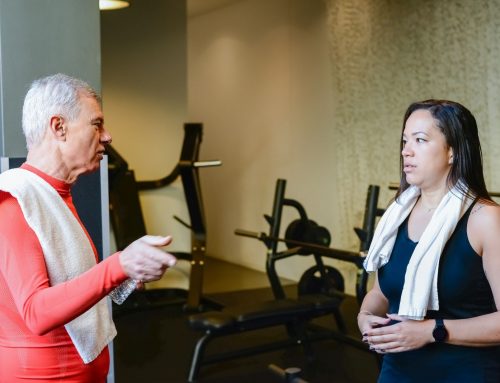

Many people do not quit a fitness program because it stopped working. They quit because it stopped feeling like it was working. The workouts still happen, the meals are still mostly on plan, but the scale has not moved in weeks, the mirror looks the same as it did yesterday, and the effort starts to feel pointless. That gap between real progress and visible progress is where motivation goes to die.
Body composition tracking exists to close that gap. When you can see what is actually changing under the surface, the quiet weeks can stop feeling like failures, and for many people it gets easier to keep showing up. This article walks through how that works, how to use the data well, and the mistakes that turn a useful tool into a source of stress.
Why motivation fades when progress goes invisible
Consistency runs on feedback. When you start a new program, feedback often shows up everywhere: clothes may fit differently, energy can improve, early weight changes may appear. Then the early changes settle, and the body keeps adapting in ways that are much harder to see day to day.
The work may still be paying off. Strength can be building, habits can be getting more automatic, and body composition is sometimes shifting even while total weight holds still. But if the only feedback you collect is a bathroom scale and a mirror, none of that registers. You are left running on willpower alone, and willpower is a poor long-term fuel.
This is one reason so many people repeat the same cycle: strong start, invisible middle, quiet quit. We wrote about that cycle in why the weight comes back after a diet. Better feedback is one of the levers that breaks it.
What body composition tracking actually measures
Your body weight is one number that lumps together very different things: muscle, body fat, water, bone, and everything else. Body composition tracking separates that single number into its parts, so you can see roughly how much of you is lean mass and how much is body fat, and how each is trending over time.
At Total Health and Fitness we use InBody scans for this. An InBody scan is a quick, non-invasive body composition estimate. You stand on the device, hold the handles, and it estimates how your weight breaks down. It is worth being clear about what that is: an estimate, not a medical test. It does not diagnose anything, and no single reading should be treated as a precise truth. Its value shows up in the trend, the direction the numbers move across repeated scans taken under similar conditions.
The scale is a measurement. It is a lousy motivator.
The bathroom scale is not useless. It is simply the wrong tool to hang your motivation on, because it moves for reasons that have nothing to do with progress: water shifts, salt, sleep, stress, the time of day, where you are in a training week. We covered the mechanics in why the scale does not tell the whole story.
The motivational problem is different from the measurement problem. A noisy number checked daily trains you to feel judged daily. One morning the scale is down and you feel unstoppable; the next it is up and the whole plan feels broken. Neither feeling reflects reality, but both drive behavior. People make their worst program decisions, skipping sessions, slashing calories, abandoning plans, in reaction to scale noise.
Body composition data, reviewed on a sensible schedule, does the opposite. It smooths out the noise and answers the question you actually care about: is my body changing in the direction I want?
The progress that can show up before the scale moves
Here is a pattern coaches sometimes see. Someone is a couple of months into consistent training and better eating. The scale has barely moved, and they are discouraged. Then a body composition scan shows lean mass trending up while body fat trends down. Total weight is flat because two changes are offsetting each other.
Without that data, this person often concludes the program failed. With it, the same period is revealed as one of the most productive stretches they have had. Nothing about the body changed between those two stories. Only the feedback did.
This offsetting pattern is also why losing weight fast is not automatically good news. If a chunk of what you lose is muscle, you have made the next stage harder. We dug into that trade-off in losing weight or losing muscle. None of this is a promise that your scan will show a particular pattern on a particular timeline. Bodies differ, and results depend on the person. The point is that when change is happening, tracking lets you see it instead of guessing.
How a tracking rhythm builds accountability
Motivation is unreliable on purpose; it responds to how you feel today. A tracking rhythm replaces some of that volatility with structure. Knowing a check-in is coming changes behavior in quiet, useful ways. The weekend you might have written off can become a weekend you mostly hold the line, because the next scan is on the calendar.
A few principles make the rhythm work:
- Scan on a schedule, not on a mood. Re-measuring every few weeks gives changes time to accumulate past the noise floor. Scanning after every hard workout or heavy meal invites the same anxiety the daily scale creates.
- Keep conditions similar. Scans compare best when taken at a similar time of day, in a similar state of hydration and food intake. Consistency in conditions is what makes the trend trustworthy.
- Review the trend, not the reading. One scan is a snapshot with error bars. Several scans in a row are a story.
- Attach the data to a conversation. A number on its own can be misread. A number reviewed with a coach becomes a decision: keep going, adjust training, adjust nutrition, or simply be patient.
When the numbers go the wrong way
Eventually a scan will show something you did not want to see. This is where tracking either helps you or hurts you, and the difference is entirely in how you respond.
Treat the reading as information, not a verdict. A disappointing scan usually has boring explanations: conditions were different, sleep has been short, stress has been high, training or nutrition drifted without you noticing, or the measurement simply landed on the noisy side of the estimate. A coach’s first move is not to overhaul the plan. It is to ask what changed, check the conditions, and decide whether anything needs adjusting at all.
What you do not want to do is what the daily scale trains people to do: react instantly and emotionally. One unwanted reading is a data point. The response to a data point is curiosity, then a plan. That mindset shift, from judgment to information, is one of the most valuable things structured tracking teaches, and it tends to outlast any single program.
Tracking works best inside coaching, not instead of it
Data does not change your body. It changes your decisions, and only if someone turns it into decisions. That is why we treat body composition tracking as part of coaching rather than a standalone service.
Total Health and Fitness has been coaching clients since 2003, and our gym is in Draper. Our weight loss coaching and personal training programs pair regular body composition tracking with the two things that actually move the numbers: structured training in a private-feeling, low-crowd gym, and nutrition coaching, with a Registered Dietitian on our Draper team. The scan tells us what is happening. The coaching decides what to do about it. You can read more about the scan itself on our InBody scan page.
Common mistakes that turn tracking into stress
Measuring too often
Body composition changes slowly. Measuring faster than the body changes just measures noise, and noise reads as failure. If tracking is making you anxious, the fix is usually a longer interval, not a different device.
Chasing a single number
Fixating on one metric, body fat especially, recreates the scale problem with extra steps. The useful view is the relationship between lean mass and body fat over time, alongside how you feel, how you perform, and how your clothes fit.
Comparing your numbers to someone else’s
Two people with the same body fat reading can look, feel, and perform completely differently. Your starting point, training history, and body are yours. The only comparison that drives useful decisions is you against your own trend.
Treating the estimate as exact
Any body composition method has a margin of error, and single readings can wobble. People who treat each decimal as truth end up whipsawed. People who watch the trend stay sane and stay consistent.
Frequently asked questions
How often should I check my body composition?
There is no single right interval, but every few weeks is a common rhythm in coaching programs, long enough for real change to accumulate, frequent enough to catch drift early. Your coach can help you pick an interval that fits your goals and your temperament.
Is an InBody scan a medical test?
No. It is a non-invasive estimate of how your weight breaks down, useful for tracking trends over time. It does not diagnose any condition. Questions about your health, hormones, metabolism, or medications belong with your physician.
What if I am just getting started? Do I need a scan first?
You do not need anything to start except a plan you can stick to. A baseline measurement early on simply makes the next months more visible, which many people find motivating. It is a helpful tool, not an entry requirement.
My weight is stuck but I feel stronger. Is anything happening?
Quite possibly, and this is exactly the situation body composition tracking was made for. A flat scale can hide offsetting changes underneath. A scan, reviewed with a coach, can tell you whether that is what is going on, and what to do next either way.
See your progress instead of guessing at it
Motivation does not fail because people are weak. It fails because effort without visible progress is very hard for anyone to sustain. Give yourself better feedback, put it on a schedule, and let a coach help you turn it into decisions.
If you are in Draper or the surrounding Salt Lake Valley and you are tired of guessing whether your effort is working, book a free consultation. We will talk through your goals, your history, and how we track progress, and you can decide from there whether the approach fits.
This article is general education, not medical advice. It does not diagnose or treat any condition. Talk with your physician before making significant changes to your diet or exercise routine, especially if you have a medical condition, take prescription medication, or are pregnant.