A nutrition plan usually holds up fine at the grocery store. Where it meets its real test is a Friday reservation, a work lunch, a birthday dinner, or Sunday at somebody else’s house. The plan that felt manageable all week suddenly feels impossible to hold, and the restaurant gets the blame.
Eating out is not really the problem. What is missing is usually a plan for it, so every restaurant becomes a decision made on the spot, while hungry, in front of other people. That is a hard moment to think clearly in, and it is a moment you can prepare for.
Restaurants Are Not Why a Plan Stops Working
It is tempting to treat a restaurant meal as the thing that undid the week. In our experience that is usually the wrong culprit. A plan that cannot survive a normal social life was probably too rigid to last, and eating out is simply where that shows up first.
Utah is a social place. There are birthdays, church and neighborhood dinners, team lunches, and family gatherings, and most of them involve food somebody else prepared. A nutrition approach that only works when you cook every meal yourself is really a holding pattern, and it usually ends the first busy week.
So the useful question is not how to avoid restaurants. It is how to walk into one without the evening feeling like a test you are about to fail.
The All or Nothing Trap
One pattern tends to cause more trouble than the meal itself. Someone orders something they had not planned on, decides the day is ruined, and eats accordingly for the rest of it. Sometimes for the rest of the week.
The meal is one meal. The spiral afterward usually matters more than the meal did. This is the same dynamic behind why so many diets fall apart without accountability, compressed into a single evening: a rule gets broken, the rule felt like the whole plan, so the plan feels finished.
Getting comfortable with the idea that a restaurant meal is a normal part of eating, and not a verdict on your character, is what many people find hardest about all of this.
Zoom Out to the Week
A single meal is hard to judge on its own. A week is easier to look at, because a restaurant meal still sits among a lot of meals you made yourself, even when it does not feel that way in the moment.
Some people find it helps to ask where a restaurant meal sits in the week rather than whether it was good or bad. A week where restaurant meals sit alongside meals you actually planned is a different picture from a week with no plan at all.
This is also why heavy restriction tends to backfire. When people cut hard and then eat out, the meal can carry a lot of pressure, and the swing afterward can be sharp. That pattern is worth understanding, because it is closely related to why weight so often comes back after a diet ends.
Decide Before You Walk In
The most practical habit here is deciding something before you arrive rather than at the table.
That can be as small as looking at the menu on your phone in the parking lot. Many restaurants post menus online, and reading one before you are hungry, without a server waiting, is a different experience.
It does not have to be rigid. A rough call is fine: roughly what kind of dish, roughly how much, whether you want an appetizer or a dessert or neither. The point is that you made the decision somewhere calm instead of under mild social pressure on an empty stomach.
If the restaurant is unfamiliar and there is no menu online, a general default helps: something you would usually be happy with at most kinds of restaurant.
Reading a Menu Without Memorizing Anything
You do not need to become an expert on restaurant menus. A few broad habits tend to go a long way.
Look for a protein you actually like. Meals built around something substantial often feel more satisfying, and satisfaction matters here, because a meal that leaves you hungry can be harder to stop thinking about later in the evening.
Notice how things are cooked and dressed. Sauces, dressings and toppings are often where a dish changes character, and they are usually the easiest thing to ask about or request on the side. In many places it is a request a server can pass along without difficulty.
Consider ordering vegetables on purpose rather than accepting whatever comes with the plate. It is a small change, and it is worth asking whether the kitchen can do it.
Restaurant portions are often generous, and there is no rule that a plate has to be finished or that it has to be left. Where taking some home is practical, some people find that an easier call to make partway through, once they know how the meal is landing.
These are options rather than rules to follow perfectly. Picking whichever ones feel natural to you is more useful than trying to do all of them at once.
What About Drinks
Drinks are easy to overlook when people think about eating out. Sodas, sweetened coffee drinks, specialty lemonades and alcohol are easy to leave out of the picture entirely, because nothing about them feels like a course.
For people who drink alcohol, it is worth deciding about drinks at the same time you decide about food, rather than separately as the evening goes on. That is not a moral point, and it is not our place to tell anyone whether to drink. It is a practical note about the order in which decisions get made across an evening.
Water on the table alongside whatever else you order is an unremarkable habit that many people find easy to keep.
The Table Is Usually Harder Than the Menu
Figuring out what to order is often the easy bit. What throws people is everyone else at the table.
There is the friend who notices you skipped the appetizer. The relative who takes it personally when you do not go back for seconds. The colleague who says you are no fun. Sometimes nobody says anything at all and there is just a sense that paying attention to your food in public makes you conspicuous.
A few things seem to make this easier. You are allowed to not announce anything. Ordering what you planned and saying nothing about why is usually the lowest-friction path, and the rest of the table generally has its own meal to think about.
If it does come up, a short reply travels better than an explanation. That you are good, that you are happy with what you ordered. Explanations invite debate. Short answers usually do not.
When someone close to you keeps pushing, it is worth remembering that it is rarely about the food. People sometimes read a change in how you eat as a comment on how they eat. That is theirs to work out, and it does not obligate you to order differently.
When the Meal Goes Sideways Anyway
Sometimes it does. The dinner was unexpected, or the day was long, or the food was genuinely excellent and you kept going.
The most useful response is also the least dramatic: the next meal is just the next meal. Not a punishment, not a fast, not an extra workout to square the ledger. Trying to compensate sets up the same swing that caused trouble in the first place, and it can quietly set up eating as something to be paid for afterward.
If food regularly feels like something that has to be compensated for, or if thinking about meals is causing real distress, that is worth raising with your physician or a licensed mental health professional rather than working through it as a coaching problem.
If a stretch of unplanned meals has turned into a month of them and the whole routine has come apart, that is a different situation, and it is worth reading about how to get back into things after a break.
Eating Out Around Draper and the Salt Lake Valley
We have been coaching clients from our gym in Draper since 2003, and the restaurant question is one we hear from clients across the valley, in Sandy, South Jordan, Riverton and further north.
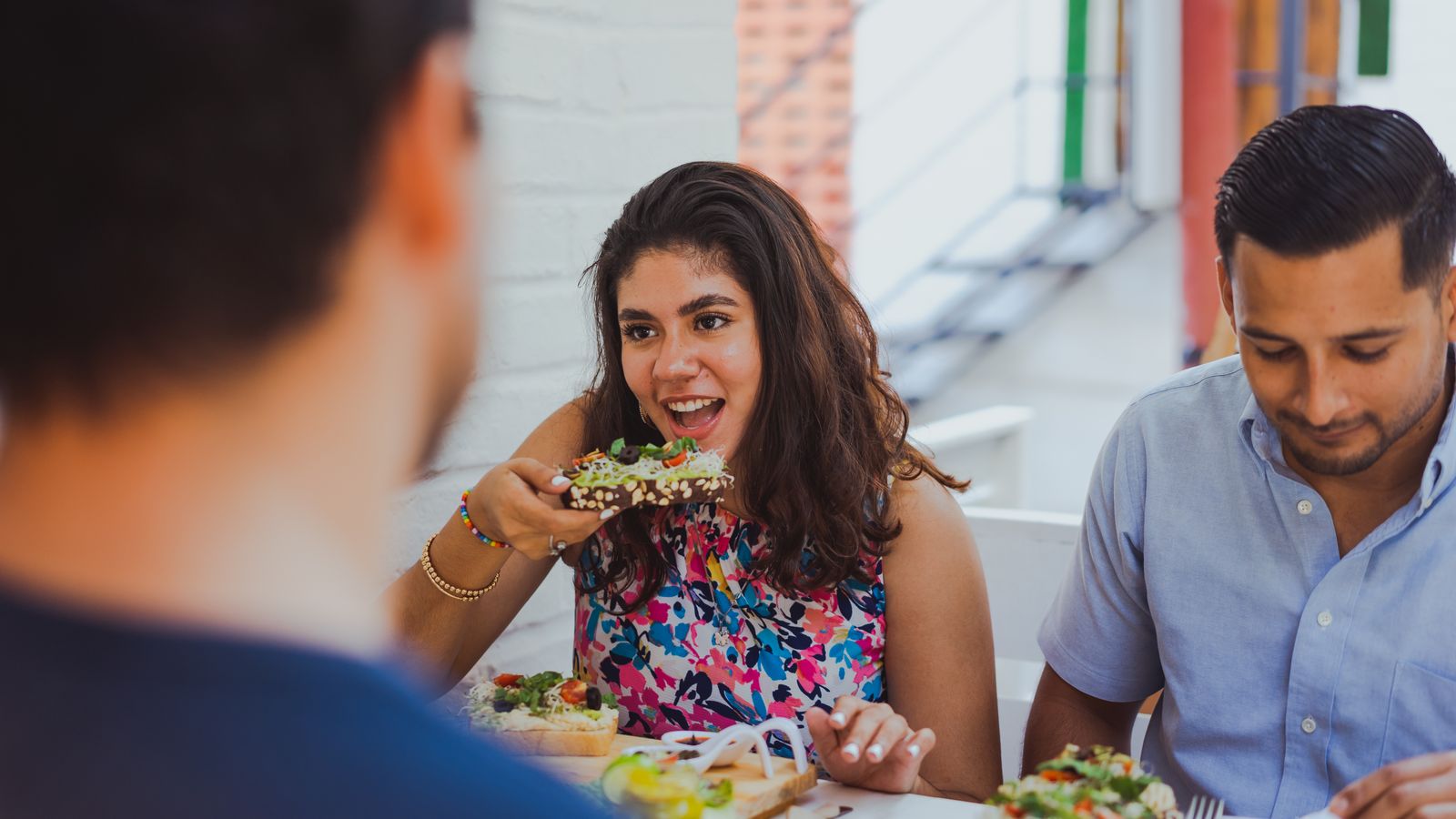
The local version of this has its own shape. A lot of eating out here is family-scale and social rather than a quiet dinner for two. Big tables, shared dishes, group orders, a lot of gathering built around food. Fast-casual spots along the corridor make weekday lunches easy to do without thinking about them at all.
This is worth naming, because a plan built around eating alone can be hard to hold in a valley where so much eating happens with other people.
Where Coaching Actually Helps
You can do most of this on your own, and plenty of people do. Coaching is most useful for the parts that are specific to your life.
Our team can look at your actual week, including the meals you do not control, and help you build something around it instead of around an ideal week that never happens. That is a different exercise than reading a list of restaurant tips, and it is closer to what nutrition coaching in Draper looks like day to day.
It also gives you a scheduled place to raise the things that usually go unsaid. The dinner that went sideways, the trip coming up, the family event you are already dreading. Those are often the moments where people quit quietly.
We have a Registered Dietitian on our Draper team, which matters more than it might sound, because the title is regulated and not every person offering nutrition advice holds it. If that distinction is new to you, it is worth understanding the difference between a nutritionist and a Registered Dietitian before you take anyone’s advice, ours included.
Nutrition also tends to work better alongside training rather than instead of it, which is why we generally look at how nutrition coaching and personal training fit together rather than treating them as separate projects.
Common Questions About Eating Out
Should I just avoid restaurants while I am working on this?
Some people prefer a quieter stretch at the start, and that is a reasonable personal choice. As a long-term approach it is fragile, because it does not teach you anything you can use once normal life resumes. Learning to handle restaurants is usually more durable than avoiding them indefinitely.
Should I eat less during the day to save room for dinner out?
People try this often, and it usually works against them. Arriving very hungry can make the decisions at the table harder, which is the opposite of what was intended. A normal day followed by a planned dinner is usually the easier version. If skipping meals to save room has become the usual pattern rather than an occasional one, that is worth raising with your physician.
Should I weigh in or get a scan after a restaurant meal?
A scale reading the next morning mostly reflects fluid and the food itself rather than a change in body composition, and checking after every restaurant trip usually adds stress without adding information. Progress is easier to read over longer stretches than day to day.
What do I do at a restaurant with no nutrition information posted?
Plenty of restaurants do not post it, though large chains are required to show calorie information, so it is often available at the places you go most often. Where the numbers exist you can use them. Where they do not, precision is not really available at a restaurant, and chasing it adds stress without adding much. Either way, the broad habits above are what this mostly comes down to.
If You Want to Talk It Through
If eating out is the specific thing that keeps interrupting your progress, that is a common place to get stuck, and a specific enough problem to work on directly. It is also the kind of thing that is easier to talk through than to read about, because what works depends on your week, your schedule, and who you tend to eat with.
We offer a free consultation with our Draper coaching team, where you can talk through what you have been trying and where it keeps breaking down. It is a conversation about your situation rather than a session that ends with a meal plan. If you are still deciding whether coaching is the right move at all, you can read more about weight loss coaching in Draper first.
Either way, the next restaurant meal is not a test. It is dinner.
This article is general education and is not personalized nutrition, medical or dietary advice. Individual needs vary. Please talk with your physician or a qualified health professional about your own circumstances, especially if you have a medical condition or dietary restriction. If food, eating, or your weight feels difficult to control, or if any of the patterns described here feel bigger than a single meal, please speak with your physician or a qualified professional. Results vary from person to person.