
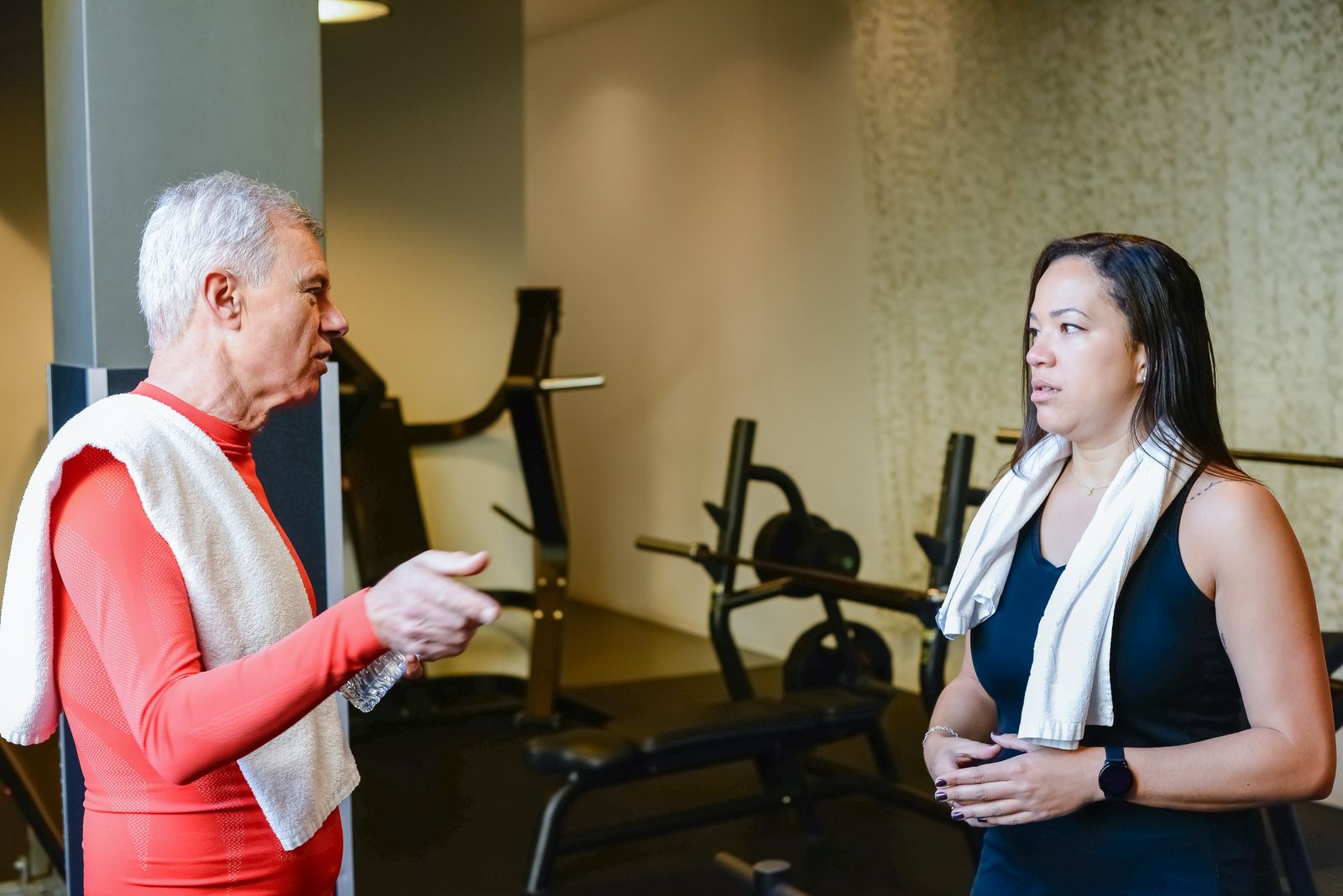
Booking a free consultation sounds easy until you sit down to do it. Then the questions start. Who is going to be in the room, whether you will be weighed in front of someone, whether the whole thing turns into a sales pitch, and whether you are fit enough to walk into a place with the word fitness on the sign.
Wanting help and asking for it are two different steps. The second one is harder: an unfamiliar room with an unfamiliar person in it is more to say yes to than another week of figuring it out alone.
So here is the whole thing, start to finish. This is what a free consultation at Total Health and Fitness in Draper involves, what it does not, and how to use the time once you are there.
What a consultation is actually for
It helps to name the purpose. This is not an assessment you pass or fail. You describe what you are trying to change, someone who does this for a living explains how they would approach it, and then you decide whether that approach is worth paying for. The decision is yours, and you make it after you have seen what the program would look like. Nothing is charged to book it.
Step one: the form
The form is short. Your contact details, your main goal, and a box for anything you want the coach to know before you come in.
That box is more useful than it looks. A bad knee, a night shift, a trip in three weeks, a history with dieting you would rather not explain from scratch. Putting it there saves you covering it cold. One caveat: if your history with food or dieting is something you have been treated for, or think you should be, start with a clinician who works in that territory rather than a fitness coach.
Step two: somebody calls you
This is the part that catches people out. After the form goes in, someone from the Draper team follows up by phone to book a time, so watch for a number you do not recognize.
Plenty of good intentions end right there. The form gets filled in, an unfamiliar number rings, it goes to voicemail on reflex, and the thing quietly stalls. If you have decided to do this, pick up. The call is mainly about scheduling.
Step three: the visit
An in person consultation happens at the Draper studio and is scheduled for about forty five minutes. Here is what it covers.
A look at the space
Ask for a look around before anything else, and pay attention instead of politely nodding through it. The room is a real part of whether a program works for you. Some people are energized by a busy floor. Others avoid one, and if that is you, the room is not a small detail. Total Health and Fitness trains people in a private-feeling studio rather than on an open gym floor. If crowded rooms are what has stopped you before, say so while you are there.
A body composition analysis
An in person consultation includes a free InBody body composition analysis. It is non-invasive, it takes about a minute, and you stay dressed and standing while the reading is taken. Comfortable clothes are perfect, and the team covers the simple do’s and don’ts when they call to schedule.
What it reports is not a verdict. It breaks your weight into parts: how much of you is fat, how much is skeletal muscle, how that is distributed across your arms, legs and trunk, and an estimate of the energy your body uses at rest. The InBody is an estimate for education and tracking, not a medical or diagnostic test.
It does record your weight, along with everything else, so that number is part of the reading. What you do with it afterwards is your business. The scan comes at the start because it gives the conversation something concrete to sit on. Two people at the same weight can need completely different plans, which is the argument for why one number on a bathroom scale is a thin way to judge progress. If you want the longer version of what the scan measures before you come in, the scan has its own page.
The team goes through the numbers with you in plain language. If you want something explained again, ask.
The conversation about what you are trying to do
You meet with one of the Nutritionist/Trainers on the team. You cover what you want to change, what you have already tried, what your week actually looks like, and what timeline is reasonable for the goal you named on the form.
Be honest here, including about the unglamorous constraints: the nights you get home at nine, the people you cook for who will not eat what you eat, the travel, the running you hate. A plan built around an imaginary schedule is harder to keep than one built around your real one, so the constraints are more useful to a coach than the ambitions are.
Sample meal plans and workouts
You are shown examples of what the nutrition and training side would look like, so the program is something you can picture instead of something you take on faith. These are samples reviewed with you in the room, not a finished plan you take home. The built-out version comes after you start.
The parts people worry about
Here are the specifics.
The published outline of the visit is a scan, a conversation, and a look at sample plans. If you want to know whether anything else is expected of you, ask when they call to schedule. The consultation carries no charge, and the body composition analysis is included with an in person visit.
Pricing is part of the conversation, because you cannot make a real decision without it. Wanting time to think a price over is a reasonable response, and you are entitled to ask for it. If a current promotion has a deadline attached, ask what it is while you are there.
How the program itself is put together
This is not part of the consultation. It is what you would be signing up for if you start. Total Health and Fitness builds its programs as three connected pieces: nutrition, exercise, and a weekly accountability check in, instead of a diet handed over on its own. The nutrition side is a Registered Dietitian-led nutrition plan, and there is a Registered Dietitian on the Draper team.
What to bring
Very little is required. A few things help.
Wear something you can move and stand comfortably in. Bring your real weekly schedule, on your phone or on paper, because a real calendar beats a guess when you are mapping out what fits. Bring any questions you already know you want answered, since they are easy to forget in the room and easy to remember in the parking lot afterwards.
If you take medication or have a condition that affects how you eat or train, know what it is called and raise it. Coaching is not medical care, and anything in that territory is a conversation for your physician as well.
Questions worth asking while you are there
You are evaluating them at least as much as they are evaluating you, so take a few of these in with you.
Who will I be working with week to week, and what are their qualifications? What happens in a normal week of this program? How does the plan change when something in my life changes? How is progress measured, and how often? What does this cost in total, over what period, and what am I committing to? What happens if I need to stop? If a credential matters to you, ask about it directly, because the titles used in this industry are not interchangeable.
If you live outside Salt Lake County
There is an online version, scheduled for about thirty minutes, for people living outside Salt Lake County. It covers the goals conversation and the plan walkthrough.
The one thing it cannot include is the body composition analysis, which needs you physically standing on the device at the Draper studio. If the numbers are a large part of why you are interested, book the in person visit.
Afterwards
The point of the visit is to come away with a clearer picture of where you are starting from and what a structured approach to your goal would involve. If you decide to start, the plan gets built out properly from there. If you decide not to, you can book again later. Total Health and Fitness has been working with Utah locals since 2003.
Common questions
Is the consultation really free?
Yes. The in person visit also includes a body composition analysis at no charge.
How fit do I need to be before I come in?
You do not need to be in shape first. That is the point of starting with a conversation and a scan.
Can I bring my spouse or a friend?
Ask when they call to schedule. A decision like this usually involves somebody else’s schedule and budget, and having them hear the answers firsthand saves relaying it secondhand.
What if I have tried programs before and they did not stick?
Say so early, including what specifically fell apart. A coach who knows that meal prep is where it collapsed builds a different plan than one who does not. If the pattern is that the weight returns once a diet ends, that is worth understanding before you start the next thing. If what fell apart involved restricting, bingeing, or a relationship with food that worried you, that is a reason to start with a clinician rather than a coach.
The short version
A form, a phone call from a number you will not recognize, a look around the studio if you ask for one, a body composition analysis that takes about a minute, a conversation about your actual life, a look at what the plan and the cost would be, and a decision you make afterwards. About forty five minutes in Draper, about thirty minutes online.
This article is general education, not medical or nutritional advice for any individual. Body composition analysis is a non-invasive estimate, not a medical diagnostic test. Individual results vary. Total Health and Fitness does not provide medical advice. Talk with your physician before starting a new exercise or nutrition program, particularly if you have a medical condition, are pregnant, take prescription medication, or have a history of disordered eating.