You have probably already decided that working with a trainer is a good idea. What people spend far less time thinking about is the room they will be standing in three times a week for the next year, and that turns out to matter more than most of us expect.
The environment is not a detail. It sets how long each session actually takes, whether you can hear your coach, whether you can get to the equipment your program calls for, and whether you keep showing up in February after the January rush has thinned out. This is a practical look at what to pay attention to when you compare training environments, and why a private-feeling gym solves a set of small problems that quietly add up.
Why the room affects your training more than it seems
Every training program depends on one thing above all others: doing it repeatedly. Programs do not fail on paper. They fail when a session gets skipped, cut short, or watered down, and the reasons that happens are usually logistical rather than motivational.
Think about what actually derails a workout. You planned to squat, the racks are all taken, so you do something else. Your session runs long because you waited twice. Your coach has to shout a correction over the music and you half hear it. You do not want to attempt a new movement with a line of people behind you. None of those are failures of willpower. They are failures of environment, and they compound.
Nobody can promise you an outcome based on where you train, and any coach who does should make you nervous. What a good environment can do is remove the friction that makes people quit before their program ever gets a fair run.
What crowding actually costs you
Time you did not budget for
Waiting is the most obvious cost and the most underestimated one. A program that is designed to take an hour takes an hour when the equipment is free. When it is not, you either extend the session, which eats into the rest of your day, or you compress it by cutting rest periods and skipping accessory work, which changes the program you are following into a different program. Do that often enough and you are no longer training the way you planned to train.
Substitutions that change the plan
The second cost is quieter. When a machine or a rack is occupied, most people swap in whatever is available. One swap is nothing. A pattern of swaps means the progression your coach built is not the progression you are running, and neither of you may notice for weeks. Being able to do the movement on the day it is scheduled is a genuinely useful thing that free floor space buys you.
Attention, on both sides
Coaching is largely about noticing. A coach watching a set is looking at bar path, knee position, where your weight sits, whether the last two reps changed shape. That gets harder in a busy, loud, visually noisy room, and it gets harder for you too. If you are managing your surroundings, you are not fully in the set.
The self-consciousness tax
Plenty of capable adults avoid certain exercises in a crowded gym purely because they feel watched. They stick to what they already know how to do, which is the opposite of what progress requires. If you have ever skipped a lift because the free weight area felt like an audience, that is a real constraint on your training, and it is one the room created.
What to look for in a private-feeling gym
Not every gym that describes itself as private means the same thing by it, so it helps to know what you are actually evaluating. These are the questions worth asking on a tour, and they apply to us as much as to anyone else.
How busy is the floor at the hour I would train
Ask it that specifically. A gym at ten in the morning and the same gym at six in the evening can be two completely different rooms, and the average across the week tells you nothing about your Tuesday. Better still, visit at your hour rather than taking anyone’s word for it, including ours.
Is my coach with me, or moving between clients
There is a real difference between a coach who stays with you for the session and a coach who circulates between several people at once. Both are legitimate services at different prices. Only one of them means every set gets watched. Ask which one you are buying.
Can I have a normal conversation mid-set
You should be able to ask a question and get an answer without raising your voice. That sounds like a small thing. It is the difference between a session where you learn something and a session where you only move weight.
Who writes the program, and what happens when I need to move a session
Find out how the programming actually changes as you progress, rather than whether it changes. Then ask what happens when work runs late: whether your usual slot is held, and how rescheduling works. A schedule that holds is what turns training from something you intend to do into something that is simply on the calendar.
Will I feel fine being a beginner here
If you are coming back after years away, after an injury, or you have never lifted at all, the room needs to be somewhere you are comfortable not knowing things yet. Photos will not tell you that. Our guide on how to choose a fitness coach when you hate the gym covers the coach side of the same question.
When a large commercial gym is the better choice
Private is not automatically better, and it would be dishonest to pretend otherwise. Large gyms exist because they genuinely suit a lot of people.
- You already know how to program and execute your own training, and what you need is access to equipment rather than coaching.
- You want a pool, courts, a sauna, classes, or childcare under one roof.
- Cost is the deciding factor, and a low monthly membership is what makes training possible at all.
- You train at genuinely quiet hours and crowding is simply not your problem.
- You like the energy of a busy room. Some people are pulled forward by it rather than distracted by it, and that is a real preference, not a mistake.
The honest framing is that these are two different products. One sells access. The other sells coached time in a controlled environment. If what you need is access, pay for access. If what you keep failing to get is attention and consistency, access is not the thing you are short of.
What a coached session in a low-crowd gym looks like
The phrase stays abstract until you picture the actual hour.
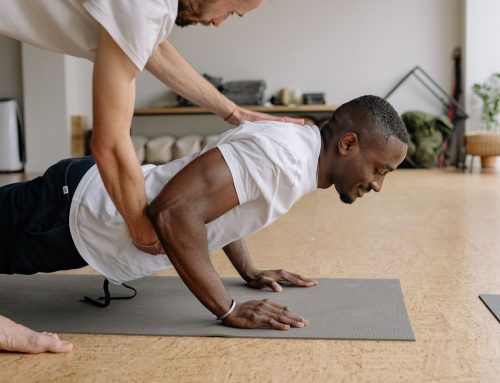
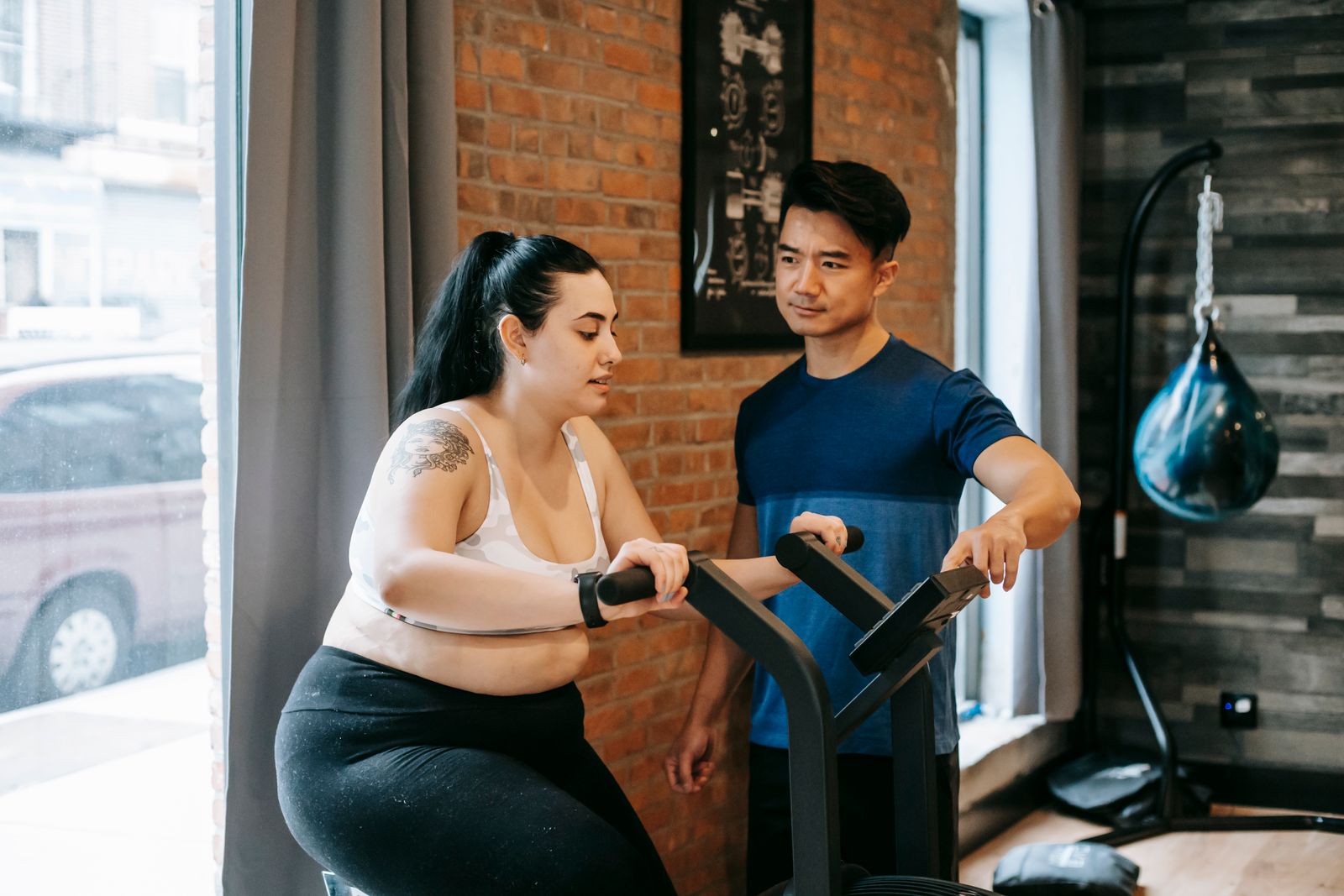
You arrive at a set time. Your coach already knows what today is, because it follows from what you did last session. You warm up while they set up the first movement. Because the floor is kept low-crowd by design, you are not usually queuing for equipment before you have started. Through the session your coach is watching the sets, adjusting load in real time, and correcting position while it is happening rather than describing it afterwards. If something does not feel right, you say so in a normal voice and the plan changes on the spot. You finish roughly when you expected to, and the next session is already on the calendar.
None of that is dramatic, and that is the point. The value of the environment is that the session becomes unremarkable and repeatable, which over months is what consistency actually looks like in practice.
If that sounds like the thing you have been missing, a free consultation is a straightforward way to ask your own questions and hear how we would approach it. No obligation either way.
How training and nutrition fit together
Training is one half of the picture, and a good environment does not change that. What you eat around your training shapes what your training can do with the effort you put in, which is why the two are usually better coordinated than run separately.
At Total Health and Fitness there is a Registered Dietitian on our Draper team, and our nutrition coaching is built to run alongside training rather than as an unrelated program. If you are weighing which of the two you need first, we wrote a full comparison of nutrition coaching and personal training that walks through it.
This also matters for how you read your progress. Scale weight on its own does not tell you whether a change came from fat, muscle, or water, which is why a body composition scan is a more useful reference point. A scan is a non-invasive estimate rather than a medical diagnostic test, and it is best used as one input among several. Our post on losing weight versus losing muscle goes into how to read that.
Training in Draper
Total Health and Fitness has been coaching people in Draper since 2003, and the model has stayed the same throughout: personal training in a private-feeling, low-crowd space, with a coach who stays with you for the session. We work with people across Draper and the surrounding Salt Lake Valley, including Sandy, South Jordan, Riverton, and Lehi.
If your goal is fat loss specifically rather than general fitness, our weight loss coaching pairs the training with the nutrition and accountability side of it.
The short version
The gym you choose is not just a place that stores equipment. It sets how long your sessions take, how much of your coach’s attention you get, which exercises you are actually willing to attempt, and how easy it is to keep showing up in month four. Those are the variables that decide whether a program ever gets a fair run.
No room and no coach can promise you a result. What a private-feeling, low-crowd environment can do is take the friction out of the way, so the only thing left to do is the work.
Ready to talk it through? Book a free consultation with Total Health and Fitness in Draper. We will go through your goals, walk you through how we train and how we would build your program, and be straight with you about whether we are the right fit. There is no obligation attached to it, and if you want to arrange a look at the space, just ask when you get in touch.
This article is general education and is not medical advice, a diagnosis, or a treatment plan. If you have a medical condition, an injury, are pregnant, or take prescription medication, talk to your physician before starting or changing an exercise or nutrition program. Individual results vary.